

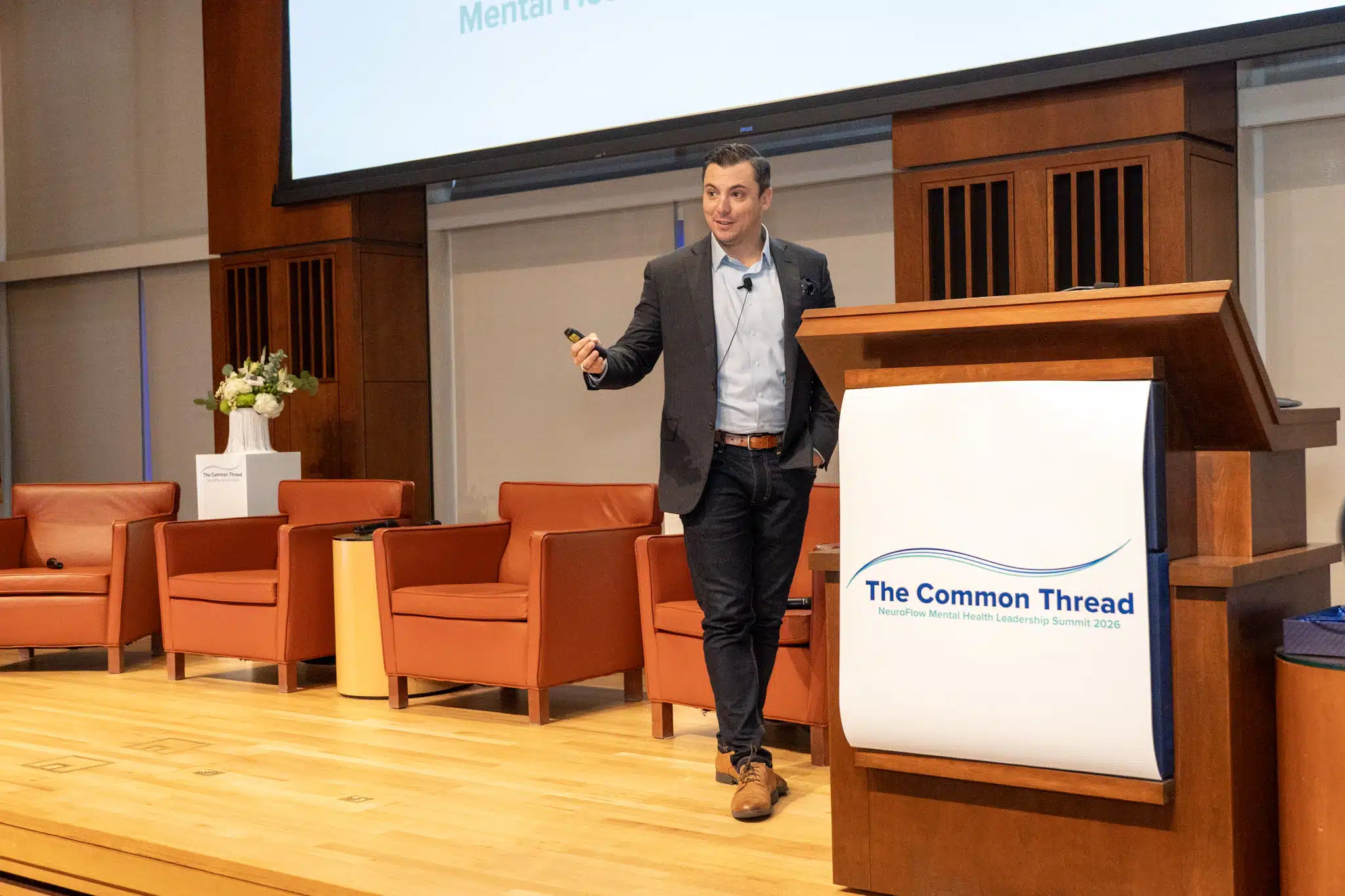
NeuroFlow’s 2026 Mental Health Leadership Summit brought providers, payers, policy leaders, and technology companies together around one goal: behavioral health care that is high quality, scalable, and financially sustainable. Speakers made the business case with hard numbers, judged referrals by whether patients improve, urged the field to help shape AI policy, and made clear that screening only counts when it leads to follow-up and better outcomes.
Last week, NeuroFlow brought healthcare leaders to Philadelphia for the 2026 Mental Health Leadership Summit, a two-day event focused on moving behavioral health to the center of care. Under the theme “The Common Thread: What Ties Us Together,” providers, payers, policy leaders, and technology companies explored how to improve the quality of behavioral health care while making it both scalable and financially sustainable. Here are the key takeaways.
Behavioral Health Belongs in the Business Plan
The Summit opened with a challenge to how the industry values behavioral health. In his kickoff keynote, former U.S. Congressman Patrick J. Kennedy framed mental health as an economic issue as much as a clinical one. The healthcare system pays for the biological side of mental illness, he said, but largely ignores the social factors that shape it. “Mental health could be the answer to our nation’s deficit,” he said. He urged the industry to find people sooner, pointed to NeuroFlow as a partner in surfacing risk early, and declared that “the future is preemption and prevention.”

Patrick J. Kennedy, Former U.S. Congressman
That framing carried into “The Business Case for Behavioral Health: Proving the ROI,” a panel moderated by Dr. Kevin Baumlin of University City Science Center with James Dold of ieso and Kelly Arduino of Wipfli. Panelists named a familiar trap. Organizations buy spot programs to fix spot problems, then use the technology at only 30% to 40% of its capability. Their advice was to embed behavioral health into every strategic initiative and measure whether it works.
During the morning’s “Innovation Spotlights,” where NeuroFlow partners showcased their initiatives, Erik Osland of evolvedMD called measurement-based care the new vital sign. An actuarial review of more than 1.3 million claims found that its integrated care saves roughly $2,200 per patient per year compared with traditional behavioral health care.
Success Means the Patient Gets Better
Speakers kept raising the bar for success. Referrals sent and appointments booked aren’t the finish line. The real question is whether patients improve.
In “Behavioral Health Referrals: Why They Break and How Technology Can Support,” moderated by NeuroFlow’s Faith Best, Dr. John Lauriello of Jefferson Health said today’s referral system often misses a patient’s treatment history. Some people get too much care, some the wrong care, and some none at all. Jefferson is working with NeuroFlow to automate parts of the process, but for Lauriello, the real test is the patient’s experience. “It doesn’t matter how ‘I’ feel, it matters how the patient feels,” he said.

From left to right: Dr. John Lauriello, Jefferson Health-Sidney Kimmel Medical College; Faith Best, NeuroFlow; Andrea Sutherland, Thriveworks; Dr. Ryan Connolly, Independence Blue Cross
Getting patients to the right care also depends on what providers know. Psych Hub co-founder Marjorie Morrison said the mental health literacy gap extends to clinicians, and that is the gap Psych Hub now targets. Its new clinical care pathways, built with more than 140 subject matter experts and backed by eight founding payer partners, give providers a shared, evidence-based roadmap for care.

From left to right: Chris Molaro, NeuroFlow; Marjorie Morrison, Psych Hub
AI Is Moving Fast, and Behavioral Health Must Help Shape It
AI ran through nearly every session, and Kennedy urged leaders to help shape what he called the biggest change in human history.
In “The State of Behavioral Health Policy,” a panel moderated by Anastassia Gliadkovskaya of Fierce Healthcare, John Snook of Meadows Mental Health Policy Institute said he heard the use of behavioral health described at a recent gathering of AI companies as “a bug, not a feature.” If lawmakers treat AI only as a danger and build the walls too high, investment won’t follow, and behavioral health will be left behind as it was with EHRs. He urged everyone to join the conversation now, while lawmakers are still deciding, so they see that AI in behavioral health is far more than a chatbot.

From left to right: Anastassia Gliadkovskaya, Fierce Healthcare; Luc Montminy, Duane Morris Government Strategies
Screening Is Only the Starting Line
Day two returned to Kennedy’s call for prevention and showed why finding people is only half the job. In “What’s Next in Behavioral Health Quality: A View from NCQA,” Margot Schwartz of NCQA walked through NCQA’s 2026 strategy and said that screening without a follow-up plan doesn’t work and a single assessment isn’t measurement-informed care. New person-centered outcome measures coming to HEDIS for Medicare in 2027 will track whether providers set a goal with each person and help them reach it.
That gap will matter even more to health plans when the Depression Screening and Follow-Up (DSF-E) measure counts toward Medicare Advantage Star Ratings starting in January. Ann O’Grady of Independence Blue Cross joined Matt Miclette and Michael Mucha of NeuroFlow in “DSF-E: The Measure & the Aim” to unpack what the measure asks of plans. Earlier measures asked whether a follow-up plan was documented, but DSF-E asks whether follow-up actually happened. Plans have just 30 days to get a member who screens positive into care.
For O’Grady, DSF-E is foundational, and outcomes are what come next. She called depression remission and response the “holy grail,” noting that about 60% of behavioral health spend goes to outpatient care with no visibility into whether members get better. Outcome measures will change that and let the industry stop talking about value-based care and start doing it.
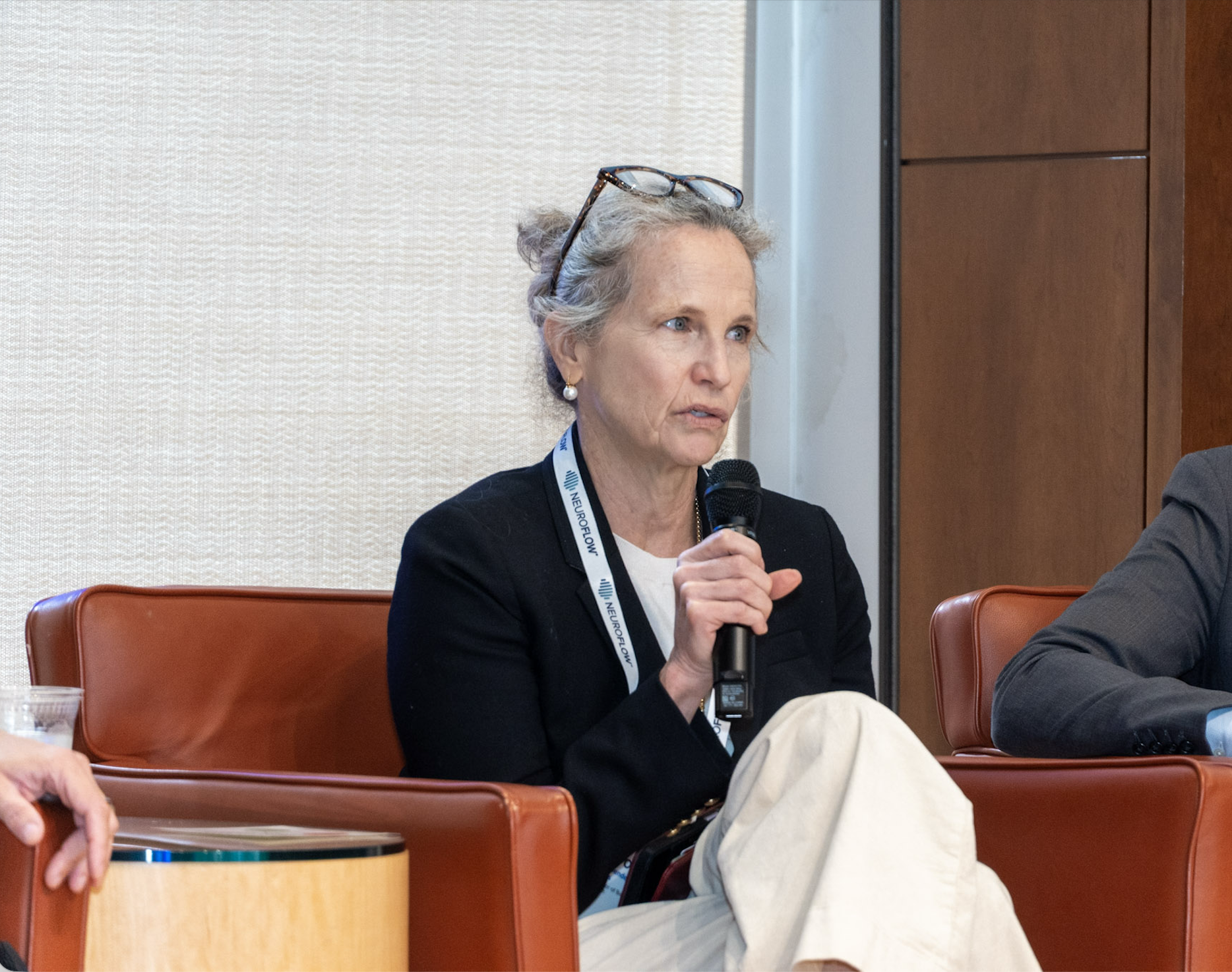
Ann O’Grady, Independence Blue Cross
Looking Ahead: Pulling the Threads Together
Two days of conversation in Philadelphia kept returning to the same thread. Behavioral health has earned its place at the center of care, and the work now is to prove its value. That means screening early and following up, judging referrals by whether patients get better, building the data foundation to measure it, and shaping AI so it serves patients with clinicians in the loop. We’re grateful to every speaker and attendee who joined us, and we look forward to continuing these conversations.
If you’d like to stay connected with this community and learn about future Summit opportunities, follow us on LinkedIn or schedule a meeting to explore how NeuroFlow can support your organization’s behavioral health initiatives.
Related posts:
 Why Most Behavioral Health Referrals Never Close the Loop
 Uncover the Financial Burden of Untreated Behavioral Health Conditions in Your Population
 The Villages Health Amplifies The Impact of Its Integrated Care Program Using NeuroFlow
 A Referral Isn’t a Match. Why Behavioral Health Patients Keep Falling Through the Cracks.